

In my opinion, Poodles hit all the marks when it comes to choosing a dog. That’s why I chose one. Well-bred Poodles come in a variety of sizes and colors, they hardly shed, and they are extremely smart. Doodles have quickly become one of the most popular dogs in America, despite not being a recognized breed. So why are Poodles and Doodles ending up in shelters?


Why are there so many poodles and doodles in shelters?
The rise of Poodles and Doodles in shelters stems from their popularity, leading to impulsive buying and unethical breeding. Misconceptions about their care, especially their grooming and hypoallergenic traits, leave owners unprepared for unexpected challenges. Overwhelmed, these owners often surrender or abandon their dogs.
Believe it or not, Poodles and Doodles entering the shelter system is a very real problem with complex causes.
The popularity of Poodles, Doodles, and Poodle Mixes
Why Are Poodles So Consistently Popular?
Poodles have consistently ranked in the top 10 most popular dogs in America. All popular dogs are more likely to end up in shelters for the simple fact that there are more of them in the community.
Poodles are second in intelligence only to the Border Collie. Their non-shedding coat can be grown out for cold weather or cropped short for hot weather. Poodles come in a range of sizes and colors to meet the needs of just about any household.
This sensitive, loving breed is deeply devoted to their family and typically does well in most households. This is among the most versatile of breeds, able to do service work, retrieve ducks and other game, all kinds of dog sports, and be a well-behaved house pet.
I’m certainly convinced that the Poodle is a great dog, I have one myself.

Need a new dog collar? My favorite is the Martingale by Max and Neo, which you can find on Amazon here.
For my full rundown of the best rescue dog collars, check out my article!


The Emergence of Doodles
When did Doodles become popular? The term “doodle” has been used since at least the 50s to describe crossbreeds with Poodles. However, breeding programs were not introduced until the 1990s, and doodles did not become the very popular dog they are today until the mid-2000s.


One of the first usages of the term “doodle” appears in Into The Water Barrier, a book by Donal Campbell from 1955 where he chronicles his speed boat racing career and anecdotally shares stories of his beloved Maxie the Labradoodle.

Many writers anecdotally credit Monica Dickens, great-grandaughter of author Charles Dickens, with breeding the first Goldendoodle in 1969 (what a fabulously small world it would be?). However, I can’t find any evidence to substantiate these claims.
Others fast-forward to 1989 and point the finger at Wally Conron who was breeding and training Labradors to be guide dogs in Australia. It’s well documented that he was contacted by a blind woman in Hawaii who needed a service dog, but her husband was allergic. So he crossed a Standard Poodle with a Labradoodle and created the “first” deliberate Doodle from a breeding program.
Regardless, the goal in creating these early hybrids was always the same: get a dog with the temperament of a Retriever with the hypoallergenic fur of a Poodle.
I talk more about the science behind this later, but I will say that Doodling does result in particularly cute dogs. Something about those wavy curls is just irresistible. I can see how someone would look at a litter of adorable Goldendoodles and think “what else can I doodle?”
Doodling Explained
The most common and popular Doodle remains the original Goldendoodle. However, there are lots of other Doodle types passing through shelters, too:
- LabraDoodle (Labrador)
- Cockapoo (Cocker Spaniel)
- BerneDoodle (Bernese Mountain Dog)
- AussieDoodle (Australian Shepherd)
- Maltipoo (Maltese)
- Schnoodle (Schnauzer
- Yorkipoo (Yorkshire Terrier)
Doodling doesn’t always involve breeding a purebred poodle with another purebred dog. Many breeders are taking it a step further and crossbreeding their Doodle hybrids.

Doodle breeders use F+(number) to describe the percentage of each breed in the puppies.
- F1: Purebred Poodle breeds with another purebred dog
- F1b: F1 Doodle breeds with a purebred Poodle
- F2: F1 Doodle breeds with another F1 Doodle
- F2b: F2 Doodle breeds with a purebred Poodle
- F3: F2 Doodle breeds with another F2 Doodle
- F3b: F3 Doodle Breeds with a Purebred Poodle
- All subsequent generations are simply called “Multigen”
Poodle Mixes
Not every mixed breed Poodle is a Doodle. Doodles are deliberately bred for specific traits. Any mutt can have some poodle in them, but that doesn’t necessarily make them a “Doodle” (even though your local shelter will probably call them one).
These mixes are typically the result of accidental litters or backyard breeding “programs” where little thought is given to selecting breeding partners. These mixes may or may not show the desirable poodle traits the breeders were going for, and are likely to end up in shelters because of it.
Misidentification of Poodles, Doodles, and Poodle Mixes in Shelters
Accurately identifying a dog’s breed is incredibly difficult without DNA testing, and because Poodles and Doodles in shelters come in a range of sizes and colors, correctly identifying their mixes in even harder.

At shelters, any dog that comes in with curly or wavy hair typically gets labeled as a Poodle. Similarly, anything with a big, boxy head gets labeled a Pitbull and anything small and smooth-coated gets labeled a Chihuahua (part of why there are so many Pitbulls and Chihuahuas in shelters, too).
But there are many other common breeds of dogs that have hair and contribute to the large number of “Poodles” passing through shelters. Here are just a few examples:
- Yorkshire Terrier
- Shih Tzu
- Maltese
- Bichon Frise
- Havanese
- Lhasa Apso
- Afghan Hound
- Portuguese Water Dog
Simply put, many of the dogs you see in shelters and in rescues that are billed as “Poodles” are not, in fact, “Poodles.”
Poodles and Doodles in Shelters Don’t Stay Long
Let’s get one thing clear: you are unlikely to see a Poodle at your local animal shelter. I see a Poodle or Poodle mix at my municipal shelter every now and then, but they never stay long.
Since no Doodle can be registered with the AKC, it’s difficult to estimate just how many they are. However, anecdotally, we know they are surging in popularity.
“Doodles are on a meteoric rise, accounting for one out of every 10 new pets added to our platform,” – Kate Jaffe, Rover Pet Trends Expert.
People who want to adopt-not-shop for their poodle or doodle are likely to be faced with stiff competition both from other fans of this breed and from rescues looking to skim some money off the fate of the dog.
In fact, the New York Times reports that “Over the past 15 years, rescue organizations have shipped millions of shelter dogs from poorer communities in the South to wealthier places in the Northeast, Pacific Northwest and Midwest, where stricter spay and neuter laws have resulted in a dwindling supply.”

Why are private rescues snatching poodles from shelters and relocating them to wealthier communities? The answer is simply supply and demand. There are more homeless poodles and poodle mixes in the south, so rescues can’t ask for as high a price for them.
Up north, poodles and doodles can be sold at high prices, into the thousands of dollars. This is a great motivator for a rescue desperate to bring money in to save more dogs. That lucrative poodle shipped north means more non-poodle dogs that would otherwise be euthanized can be saved in the south.
- Related Article: Why Are There So Many Boxers In Shelters?
Why So Many Poodles and Doodles in Shelters and Rescues?
Unethical Practices
Where there’s money to be made, there are bound to be people doing it unethically.
Irresponsible breeders interested in making a quick buck at the expense of the dogs and gullible, desperate buyers end up producing vast numbers of these dogs, often with serious health and behavioral problems.
Impulsive buyers who are willing to buy from an unreputable source are not likely to be the most responsible pet owners, landing large numbers of these dogs in shelters. Uneducated buyers who think they won’t be allergic to a poodle or a doodle get the dog home to find out that they are in fact allergic and then surrender the dog to a shelter.
Those shelters, desperate to clear kennels, collaborate with rescues of all sorts, handing over fully vetted Poodles and Doodles for free or cheap. Some of these “rescues” then “adopt” those dogs out for high fees (I’ve seen up to $1,000 for a rescue poodle).
High Demand
High consumer demand for Doodles means many unethical “rescues” take more poodles and doodles than they can care for properly. A recent case saw the founder of the now-closed Georgia Poodle Rescue arrested for animal cruelty after police seized 56 unhealthy, neglected poodles. Despite likely acquiring many of these dogs for free and keeping them in poor conditions, she still charged between $150 and $900 per poodle.
Other adopt-a-dog websites are actually just brokers for puppy mills. Unethical breeders sell cheap dogs to, or coordinate with, fake rescues who in turn deceive well-meaning buyers. Thinking they are rescuing a puppy, those buyers end up paying astronomical adoption fees for puppy mill dogs.

Unethical breeders, as unconcerned with the well-being of their breeding stock as they are for the puppies they are breed, frequently abandon these dogs when they are older or get sick.
These breeders and “rescues” also often ignore health and behavior issues and lie to adopters in order to make quick sales. Many of those dogs end up back in shelters when their owners face these challenges they were unprepared to handle.
The temptation of easy money also affects poodle and doodle owner behaviors. They may avoid fixing their dogs in the hopes of breeding them some day, leading to unplanned litters. Owners often breed these adorable dogs casually, without a well-suited home lined up for their dogs.
These owners often end up with older dogs with behavior issues that they give away for free or cheap to people who don’t know what they’re getting into, further increasing the poodle and doodle population in shelters and rescues.
It’s crucial for potential dog buyers to do their research when buying poodles and doodles. Their cute appearance often leads to impulsive purchases from unscrupulous sellers.
Resources


This is a comprehensive guide for Poodle and Doodle owners. With over 350 five-star reviews, it offers in-depth information on the different Poodle types and essential training and behavior techniques. From understanding the Poodle mindset to grooming and health, it covers it all. I got this book when I got my Poodle, and I loved the quotes from breeders, groomers, and owners.
This is a quintessential guide for Doodle owners. It provides insights into identifying Doodle breeds, selecting the right one for your family, grooming, training, and ensuring their overall well-being.


The “Puppy Primer” by Dr. Patricia McConnell and Brenda Scidmore is a favorite among dog trainers. While not specific to poodles or doodles, it’s ideal for buyers, adopters, fosters, volunteers, and anyone else who wants a well-adjusted puppy.
Behavioral Issues
Many people who get a poodle or mix assuming it’s a passive, mellow, froufrou dog are shocked to find themselves with a full-on working dog who needs much more engagement, exercise, and training than they were expecting.
There’s a reason that the first Doodle was made. I adore my Poodle and I’m glad I chose this breed, but it’s not for everybody.
If not properly managed, a poodle’s intelligence and sensitivity can make them overly independent, unreasonably fearful, and surprisingly aggressive. These traits also come out in Doodles.

This is bad in any circumstance, but for a dog that requires at least monthly grooming, poor training can result in painful coat matts that can lead to health issues.
Overcorrecting by using harsh training methods can easily wound your sensitive poodle, resulting in a simpering, terrified dog that may become aggressive.
Owners of these dogs, unprepared to deal with the physical and mental needs of a poodle or poodle mix, opt to surrender their dogs rather than confront these challenges.
Misleading Marketing
One of the most common misconceptions spread by some breeders is the extent of the grooming needs of poodles and Doodles. Many breeders downplay the grooming needs of Poodles and Doodles. This often leads to unintentional neglect, causing potential skin issues beneath matted fur. Additionally, the cost of professional grooming is an expense that’s frequently understated.
Also, the term “hypoallergenic” is often used to market Poodles and Doodles, but this is exceptionally misleading. While Poodles shed and lick/drool less than other dogs, reducing owners’ exposure to common canine allergens (dandruff and saliva), no dog is entirely hypoallergic.
And when Poodles are crossed to create Doodles or mixes, the resulting litter doesn’t necessarily inherit any hypoallergenic traits from the Poodle parent. Despite this, word on the street remains that doodles are a hypoallergenic alternative for pet parents with allergies, resulting in lots of poodles in doodles in shelters when their new owners start sneezing.
Poodles come in a wide range of sizes, from 5 lb to well over 50. The dogs they are mixed with can also be highly variable in size, so their mixed offspring’s size can be unpredictable.
This unpredictability extends to their behavior as well. Doodles are often advertised to be the best of their parents, calm, loving, intelligent, and great with kids. In reality, the combination of breeds can result in unpredictable behavioral traits.
All of these factors contribute to owners ending up with dogs they were not prepared for, which in turn results in these dogs going to shelters.
Geographical Considerations
Poodles have curly, dense coats that require frequent trimming in hot climates. When crossbred with double-coated breeds like Labradors, their coat becomes even thicker. Many Doodle owners prefer not to shave them, as the bouncy, wavy coat is one of the doodle’s main appeals.

However, in warm climates, Poodles and Doodles can quickly overheat, making it difficult to exercise them. Managing their high energy without overheating can be challenging, sometimes resulting in behavioral issues and rehoming.
Many believe that Poodles and Doodles, known for their adaptability, are suitable for apartments with a short walk once a day. However, Poodles are historically high-energy working dogs.
Despite their posh image, even small poodles and doodles require significant outlets for their mental and physical needs. Owners that don’t provide their Poodles or Doodles with sufficient mental and physical stimulation will be met with dogs that have figured out how to entertain themselves, typically in ways the owners isn’t thrilled with.
Grooming and Maintenance
I spend about 3 to 4 hours a month maintaining my Poodle’s coat in the summer and about half that in winter. This is a lot of time. Professional grooming can cost over $100 per session. Whether DIY or professionally done, maintaining a Poodle or Doodle coat is a significant commitment.
Doodle breeders often promote the misconception that Doodles are lower maintenance than Poodles. In fact, on average, Doodles require more grooming because the inconsistency in their coat types can result in increased matting.
Floppy ears that grow dense hair inside them, such as Doodles and Poodles have, are a recipe for ear infections. Plucking the hair may help, but there’s also some argument that it may make infections more likely.
Poodles and Doodles often need dental work, particularly smaller-sized individuals whose teeth can become crowded in their mouths. This kind of dental work can get expensive, especially as the dog gets older.
Pro Tip: The DIY poodle groom is actually pretty easy, and you only really NEED a couple of things to do it cheaply at home. A metal comb like this one is essential. You’ll also need detangling assistance like this detangler by We Love Doodles (truthfully though, I just use cornstarch, which works great).
Get Some Clippers
The last thing you NEED is a pair of clippers. There are basically two schools of thought when it comes to buying clippers for your poodle or doodle:
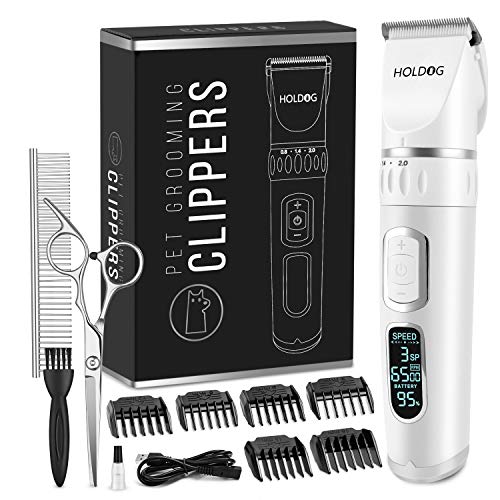
#1 – Buy two pairs of inexpensive clippers. You can switch to the back up when the first gets hot or the battery runs out. You’ll need to replace them every couple of years because the blades will wear out quickly. This is the route I went, and these clippers by HOLDOG are the clippers I use.


#2 – Buy one pair of high-quality clippers. These can be used for longer periods of time without getting hot or dulling. You’ll likely want to have the blades professionally sharpened every now and then, but you may find the quality worth the higher up-front cost. These clippers by the Andis Store are the ones I may get if I go that route.
Health Issues
Poodles
Poodles are generally pretty healthy. However, Poodles and many of the breeds they are commonly doodled with are prone to some common health issues like hip or elbow dysplasia. Epilepsy and progressive retinal atrophy are also common. Miniature Poodles and Doodles are prone to IVDD, which requires lifelong management and can result in paralysis.
Gastric dilatation-volvulus (GDV or bloat), occurs in deep-chested breeds like Poodles and can be fatal and expensive to treat. Poodles have Addison’s disease in their lineage, and many also suffer from allergies. Since so many of the things that Poodles and Doodles are prone to are chronic, owners may get frustrated and surrender them rather than deal with the issues.

Doodles and Mixes
It’s possible for Doodles to get any of the genetic conditions that Poodles get. First-generation Doodles are less likely to express genetic conditions than purebred dogs, although they’re more likely to carry them.
Any issues present in both parent breeds can be inherited by the puppies. Since hip dysplasia is common in both Labradors and Poodles, if a Poodle and a Labrador that both carry a gene for hip dysplasia are bred together, the puppy is just as likely to get hip dysplasia as if two purebred Poodles who carried the genes for hip dysplasia were bred together.
First-generation hybrids are least likely to express genetic diseases due to hybrid vigor or heterosis. But the more subsequent generations are bred back to the Poodle or another doodle, the more likely it is that one of the genetic diseases will come out.
Size variation in Doodles can also lead to issues. Mixing dogs of different sizes together can result in issues like structural problems and overcrowded teeth and dental disease in smaller dogs.
Smaller doodles may also be more likely to experience patellar luxation. Because the breed may already be prone to hip dysplasia, it’s possible to end up with both hip and elbow problems in the same dog, which is otherwise fairly uncommon.
Typically large breed dogs are affected by hip problems and small breed dogs by elbow problems. Behavioral characteristics like the tendency of labs to overeat can result in issues like obesity in the Doodle.
- Related Article: Why Are There So Many German Shepherds In Shelters?
Adopt Responsibly
Want a Doodle? You’re not alone. There’s high demand to rescue these dogs, although opportunities do come up. Owners willing to adopt a dog with medical or behavioral issues, a dog bonded with another dog, or older Poodles or Doodles in shelters are more likely to be able to find one.
If you want to buy a Poodle or a Doodle, that’s perfectly fine. However, do it responsibly.
Be aware that there may be more scams and unethical breeders when it comes to these kinds of dogs than other breeds. When I bought my poodle from a breeder, I did a LOT of research and insisted on meeting the whole litter and the parents.

Choose breeders who perform health testing on all breeding dogs and are committed to ruling out genetic diseases. Only choose breeders who house their dogs in homes with families who love them, not in kennels where they don’t receive the appropriate social, mental, or physical stimulation they need.
It’s up to you whether you want a Poodle, a Doodle, or to seek out a rescue dog or a breeder. There are lots of opinions about whether these dogs are a good pet or should even be bred at all. However, it’s up to you to make responsible, ethical decisions by choosing a great breeder or adopting poodles and doodles in shelters.
Sources
- https://www.akc.org/expert-advice/dog-breeds/most-popular-dog-breeds-2022/
- https://www.clickorlando.com/features/2023/06/03/florida-rescue-group-has-over-a-dozen-doodles-and-other-dogs-in-need-of-homes/
- https://pictures.abebooks.com/inventory/9262246191.jpghttps://pictures.abebooks.com/inventory/9262246191.jpg
- https://www.petcp.com/oodles-of-doodles-the-history-of-the-breed/
- https://kutv.com/news/nation-world/man-who-bred-first-labradoodle-says-he-created-a-frankensteins-monster
- https://www.rover.com/blog/press-release/rover-announces-americas-most-popular-dog-breeds-of-2021/
- https://www.nytimes.com/2019/06/29/sunday-review/adopt-rescue-dog-south.html
- https://www.fox5atlanta.com/news/police-arrest-the-founder-of-a-poodle-rescue-on-animal-cruelty-charges
- https://www.stoponlinepuppymills.org/online-puppy-brokers/
- https://www.mayoclinic.org/diseases-conditions/pet-allergy/symptoms-causes/syc-20352192
- https://pubmed.ncbi.nlm.nih.gov/29708978/
- https://www.ncbi.nlm.nih.gov/pmc/articles/PMC6940824/
- https://www.sonoranstandarddoodles.com/?fbclid=IwAR2F1JZ_-qKdTgVveIlDFpWfuUwWE7QTGL3YwO024FRUf_0TXZTEiYitJ5s