
Rescue dog collars are more than just necklaces for pets. They tell a story of hope, love, and fresh starts. They can also be great training tools or essential safety gear to protect your dog and the community. Choosing the right collar for your rescue dog is, therefore, crucial, whether you adopted your dog or you’re working with a dog from a shelter or rescue.

Related Post! Steps For Leash Training A Rescue Dog
What’s the best rescue dog collar?
The Martingale Collar from Max and Neo is the best all-around collar for rescue dogs. It has an escape-proof design and safety features like locking clasps and reflective stitching. However, it’s essential they are fitted and used correctly.
What really sets the Max and Neo Collar apart is the company’s commitment to helping rescue dogs. For every collar purchased, they donate a collar to an animal shelter. This one-for-one donation model is something I really respect and love to support.
And, like I said, it’s high-quality, versatile collar. It’s the one I use on my own dog.
However, this collar may not be right for every dog and owner. I go into more detail about all the types of collars and materials available later (seriously, so much detail). But for now, here’s a quick roundup of the best collars for rescue dogs.
The Best Collars For Rescue Dogs
Best Budget GPS Collar – Read More
Apple Airtags & DLENP Silicone GPS Tracking Device


SHOW MORE COLLARS

Choosing a Dog Collar
Choosing a dog collar is about more than style; it’s about safety, comfort, and understanding each dog’s unique history.
Some rescue dogs, for example, have been tethered for long periods or even left with collars on so long they become embedded in their skin. This could obviously lead to a distrust or fear of them. This past trauma might even result in aggression when attempting to put a collar on the dog.
While a shelter dog might seem fine with the slip lead, this doesn’t mean they’ll be comfortable with a collar. Many dogs experience the slip lead for the first time in the shelter, so their perception of it can differ from that of a collar.
It’s essential to carefully gauge a shelter dog’s reaction to a collar before you put it on.
I like to leave a collar and leash on the bench in the play yard so dogs can encounter them on their own, apart from me, while I watch.
Remember, some rescues can cleverly escape from collars. While a well-fitted Martingale is basically inescapable, dogs may react strongly to not being able to slip out when they thought they could.
Always introduce a collar in a secure area, and if a dog panics, release and distract until you can safely remove it.
Always attach ID tags to a rescue dog’s collar and ensure they’re microchipped before outings. Personally, I prefer using both a collar and harness with rescue dogs initially.
Related Post! Pros & Cons Of Fostering A Dog
Dog Collars By Type & Design
Buckle or Snap Flat Collar
This is the most common type of dog collar. For many dogs, there’s no need to look beyond a flat collar.

Flat collars can be made of nylon, leather, plastic, or any other material that sits flat against the dog’s neck. Typically, flat collars have a ring for attaching the leash and tags, although some have two rings for attaching tags and the leash separately.
These collars are ideal for dogs that wear tags regularly and are well-behaved on a leash. They’re perfect for pups that won’t attempt to escape their collar during walks.
Avoid this collar type if you are not 100% sure the dog won’t try to rear and back out of the collar. Even when secured properly, a determined dog can slip out of this type of collar. This is also not a great collar for persistent pullers as it can strain their trachea.
The best flat buckle collar for dogs: Taglory Nylon Buckle Collar

This snap flat collar stands out for its safety lock, preventing accidental releases while allowing quick removal in emergencies. It also has reflective stitching all the way around and comes in lots of pretty colors. A price tag under $10 doesn’t hurt either.
Martingale Collar
This is the collar I use and recommend for the vast majority of rescue dogs and what I use for my own dog.
Often referred to as a limited-slip collar, the Martingale’s dual-loop design helps prevent dogs from escaping their collars, without the risks of choke collars. They’re available in slip-over-the-head or snap designs, but I lean towards the snap variety so you can easily remove it in case of emergencies.
Martingales are best for dogs prone to slipping out of collars. They were originally used for dogs whose necks are similar in size to their heads. Think slender-headed dogs like Greyhounds and thick-neck breeds like pit bulls. The thicker versions used for Greyhounds are sometimes referred to as butterfly collars.
These dogs’ unique anatomies make it easier for them to slip out of traditional collars. However, they’re effective for virtually any dog. The limited tightening can be felt by the dog when it pulls. And if you use a Martingale with a chain loop, they’ll also hear the click. This can be a gentle reminder for the dog to avoid pulling.
Continuous pullers might restrict their breathing due to the collar’s design. While it doesn’t strangle like a choke chain, it can still hinder breathing.
Martingales should not be left on dogs all the time. The loose fit can snag things or be caught in another dog’s teeth during play. Martingales are only suitable for supervised leash walking and training.
The sensation of a tightening Martingale might trigger traumatic memories for dogs who were trained aversively before. These dogs might be better off with a flat collar or with careful acclimation before using a Martingale.

It’s essential to know how to correctly adjust the Martingale. Martingales must be fit properly to be effective.
The best Martingale collar for dogs: Max and Neo Martingale Collar
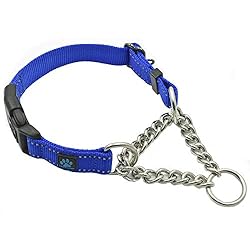
This is the Martingale I use for my own dogs and for rescue dogs, and I can’t recommend it highly enough. For every collar they sell, Max and Neo donate a collar to an animal rescue organization. I know the donation box at my shelter is typically full of them. It comes in either a chain or nylon loop. Features like a locking clasp, reflective nylon stitching, and a separate tag loop for noise reduction make it stand out. Again, I highly recommend this collar.
GPS Collars
If I had endless funds for rescue, I would get a GPS collar for every dog that left the shelter. I cannot emphasize how invaluable it would have been if Joel was wearing a GPS collar when he escaped from his harness and bolted through downtown Gainesville.
These collars have evolved significantly from the bulky early versions. You can even monitor your dog straight from your smartphone!
The only downside is that they can be prohibitively expensive, and not everyone is tech-savvy enough to use all their useful features.
If you have escape-prone dogs, bolters, or wanderers, a GPS collar is almost non-negotiable.
It’s crucial for off-leash dogs and is often found on hunting and outdoor working dogs. In rural areas with potential wildlife threats or while traveling, these collars provide extra security. They make finding your dog 1,000x easier.
Again, I believe any unfamiliar shelter dog would benefit from a GPS collar. However, if it’s your own dog and they aren’t prone to running off, it may be overkill.
If you’re looking for something meaningful to donate to your local shelter that they might not have yet, consider purchasing a few GPS collars.
They’re ideal for skittish dogs or known escapees and can be reused post-adoption by the shelter.

At my local shelter, a timid little black dog escaped from an adoption event this year. It took FOUR MONTHS to find and catch her again. A GPS collar would have been a game-changer in this case.
The Best GPS Tracker Collar For Dogs: Tractive GPS Pet Tracker

Here’s a well-reviewed GPS collar loaded with extra features. It has an LED light to easily spot your dog at night, live tracking, location history, a virtual fence feature, and it can even track their activity and calories burned!
The only downside is that it requires a monthly subscription. It’s less than $100 per year, but that adds up, especially if you don’t frequently use all those fancy features.
A great budget option is this Apple Air Tag in a specialized holder.
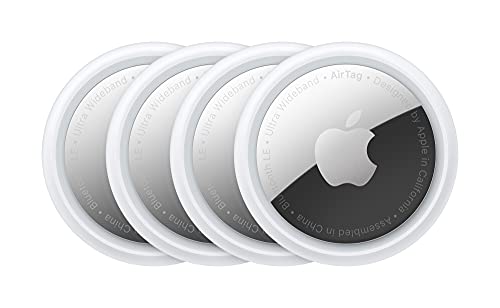
Apple Air tags are affordable little tracking devices. You can track their location right from your phone.
And this nifty little holder will keep your Airtag safely attached to your dog’s standard collar. Plus, no monthly subscriptions, and you can use the Airtag for other purposes when it’s not on your dog.
If your dog plays intensely or will be doing rough work outside, this heavier duty option may be better.

Flea Collars
While not made for leash-walking, flea collars are common and worth mentioning. They continuously emit insecticides to control fleas and sometimes ticks and other pests. They’re an economical option to prevent fleas, especially if a rescue dog’s recent flea medication status is unknown.
However, they might deliver inconsistent doses of medication, and potential side effects might be more common compared to other flea controls. Moreover, they don’t protect against heartworms, so dogs still need to take monthly heartworm prevention.
For those seeking an affordable solution to address a potential flea or tick issue, especially if unsure about a dog’s recent treatments, flea collars are a good temporary solution. It’s not a bad idea for rescues, especially rural ones, to have a few on hand.
Dogs with skin sensitivities or allergies might experience irritation. The inconsistent medication delivery may pose risks to young puppies, possibly leading to overdoses and subsequent adverse reactions. Always consult a veterinarian when considering flea control for pregnant, nursing dogs, or those with health issues.
The Best Flea Collar For Dogs: Hartz UltraGuard Pro Reflective Flea & Tick Collar

This is a decent standard flea collar, and I appreciate its reflective coating for added safety.
Therapeutic Collars
It’s a comforting thought that the collar you put on your dog could provide benefits to their well-being, rather than just carrying their tags and being a leash attachment point.
However, studies on therapeutic collars, like most therapeutic tools for dogs, are either inconclusive or haven’t been conducted. But that doesn’t necessarily mean they don’t work.
One notable study did conclusively note that dogs who received a dog-appeasing pheromone showed significantly “reduced scores of fear and anxiety” in response to thunder. However, a more systematic review of the efficacy of pheromones found that 11 out of 14 reports yielded insufficient evidence to support their use.
In general, if the dog doesn’t mind the collar and you think it might help, go for it. Be cautious with collars releasing chemicals or made from unique materials to ensure they aren’t causing irritation.
While primarily targeted at anxious or hyperactive dogs, some therapeutic collars might also address physical issues.
If your dog seems to dislike the therapeutic collar you’re trying, it’s best to remove it. It’s okay to try again later to see if they’ve changed their mind, but don’t force a collar like this on a rescue dog.
The Best Therapeutic Collar For Dogs: PROEXL Copper Magnetic Therapy Dog Collar

For those considering a therapeutic route, this lightweight copper collar might be a subtle introduction. Just ensure it’s removed when the dog is unsupervised to prevent snagging.
The Best Pheromone Collar For Dogs: Tcllka Store Calming Collar

If you want to give pheromones a try, this collar might be a good option. It continuously releases pheromones to calm your dog, similar to how a flea collar releases medication.
Medical Collars
Also known as the “e-collar” (which doesn’t make sense) or the “cone of shame,” medical collars are used during recovery from injury or illness. They’re designed to prevent dogs from chewing or licking a part of their body. Traditionally, they’re designed as hard plastic cones encircling the dog’s neck, but newer versions resemble inflatable neck rings.

Veterinarians typically prescribe medical collars for recovery periods. They’ll guide you on whether the dog requires a traditional rigid cone or if the softer inflatable version will suffice.
I’ve seen many instances where a veterinarian recommends a medical collar to prevent a dog from chewing, but the advice isn’t heeded. The results can be disastrous.
I advise using the recommended medical collar unless you’re closely monitoring the dog. It’s surprising how quickly a dog can access their injury. Also, remember that obstructing them from tending to an itch or pain might frustrate them or lead to aggression.
Rescue dogs often come with a package: food, medications, and a big ole medical collar, especially after their spay/neuter surgeries or due to skin conditions like mange or dermatitis.
However, managing a dog in a medical collar can be challenging. Dogs are notably clumsy in them, they hate them, and basic everyday tasks become more challenging.
I recommend removing it briefly to give the dog a neck rub and a good scratch in non-injured areas, then promptly putting it back on. Leaving it off for extended periods only makes it harder to replace when you’re not watching the dog.
It’s wise to ask your veterinarian for something to calm the dog if needed. A dose of Benadryl has worked well for me in the past.
The Best Medical Collars For Dogs: Supet Recovery Collar
This is a well-reviewed standard rigid plastic e-collar. It’s important that these fit your dog perfectly, which is why I like that this one comes in 6 different sizes.
This is a great inflatable dog neck donut. I’ll admit they look extra doofy, but the soft material is much more comfortable for your dog, especially post-surgery. And the short design makes it easier for your dog to eat and drink while wearing it compared to the traditional cones.

Safety Stretch Collars
It’s crucial for rescue dogs to wear collars with ID tags at all times, especially if they’re prone to bolting or escaping. However, there are inherent risks with collars: incidents of tags caught in vents, collars ensnared on branches, or even collars causing obstructions during play are not uncommon.
Safety stretch collars are designed to mitigate these risks. With an elastic panel that gives way under pressure, the dog can pull free. While not designed for leash activities, they’re apt for round-the-clock wear.
Any dog that needs to wear a collar and tags constantly but can’t be supervised all the time might benefit from one of these collars. This is another donation that I believe would benefit any shelter.
Shelters often face a dilemma: the hazards of continuous collar wear against the risks of an uncollared, and potentially lost, escapee. These collars help fix that problem.
Dogs that dislike wearing collars and actively try to remove them will easily dislodge these collars, given their breakaway design. Additionally, dogs prone to eating non-food items can get the collar off, eat it, and get a fatal blockage. Therefore, these collars must be used with care.
The Best Safety Stretch Collar For Dogs: Educator Quick Snap Bungee Dog Collar

I appreciate this stretch collar because it’s waterproof and quick-drying, decreasing the risk of skin chafing with long-term use.
Break-Away Collars
Break-away collars, much like safety stretch ones, are designed to detach under pressure. I slightly prefer them because there’s virtually no chance they won’t break away, whereas safety stretch collars might still trap a dog.
Moreover, dogs attempting to remove their own collars are less likely to succeed with these, though it’s still possible. Some models even include dual leash attachment points, making them leash-walk compatible— a handy feature for a collar intended for continuous wear.
Ideally, every rescue dog should wear either a breakaway or safety stretch collar, with breakaways being my preference. Unless a dog has a significant fear of collars or a habit of chewing or tends to consume non-food items, these collars should be a staple.
Dogs that ingest inappropriate items might break and swallow these collars, so they’re best avoided. Dogs resistant to wearing any collar might also be unsuitable candidates.
The Best Breakaway Collars For Dogs: Petsafe KeepSafe Break-Away Collar

This breakaway collar stands out due to its adjustability and sturdy double rings. These enable leash walking while still serving its primary breakaway purpose.
Aversive Training Collars
In most cases, I don’t believe the following collars should be used with rescue dogs. While aversive training techniques have their place, they should only be employed when positive training methods fail.
Given the unknown past of rescue dogs and the limited time they’ve had to bond with us, aversive techniques are seldom appropriate.
Nevertheless, I acknowledge that each dog, rescuer, and situation is unique. I’ve witnessed powerful dogs with severe behavioral issues who might have otherwise been euthanized receive training and be saved using balanced training.
Positive reinforcement ONLY is not always the right decision.
Still, venturing into aversive training requires the steady hand of a seasoned expert for several reasons:
- Past Trauma: Many rescue dogs have endured terrible experiences. They might be all smiles in a positive setting, but aversive methods can easily trigger past traumas, potentially leading to aggression and breaking trust.
- Lack of Training History: Without knowledge of a dog’s previous training, their responses will always be unpredictable. They might have been previously exposed to failed aversive techniques, making them particularly resistant to those techniques now.
- Physical Health: Unknown health conditions in a rescue dog might surface during aversive collar training. The stress can exacerbate heart or neural conditions.
With that said, let’s cautiously explore the collars falling under the aversive category. Only consider them as a last resort. And always with the supervision of an experienced trainer.
Self-Tightening Choke Collars
As a shelter volunteer, I frequently use a slip lead—a self-tightening collar and leash—to guide dogs from their kennels to the yard. However, I believe that’s the extent of the usefulness of a continuously tightening collar.

Why not incorporate a second loop, as seen in the Martingale design, to prevent choking or intense collar tightening? However, I recognize that different dogs and scenarios may sometimes warrant tools like the choke chain.
Under the guidance of an experienced trainer, some shelter dogs might benefit from aversive training using a tool like a choke collar. This is especially true if the dog is bigger or stronger than the handler. This tool can offer valuable instant feedback to a powerful dog.
Most rescue dogs should not use a choke chain. I firmly believe that aversive training techniques like the choke collar should only be used with a rescue dog under trainer supervision.
Many professionals even favor alternatives like e-collars or prong collars since many dogs don’t respond to choke chains until they’re actually choking.
Choke collars are tools that come with significant risks and responsibilities. If considering using one, self-education, supplemented with expert insights, is essential. Given the potential for harm, many trainers and dog owners choose safer, kinder training alternatives.
The Best Choke Collar For Dogs

If you’re going to use a self-tightening choke collar, I like this simple rope collar. It’s easy to use and the convenient stopper prevents the collar from loosening too much and falling off.
Prong Collars
This collar consists of chain sections equipped with prongs that pinch the dog’s neck when it pulls. Contrary to some beliefs, these prongs don’t pierce the skin when properly fitted. It still hurts, though.

Typically featuring a Martingale design (though non-tightening versions are available), this collar is undeniably an aversive training tool. It should only be used if other techniques haven’t worked and under the guidance of an experienced trainer.
I believe that aversive tools like the prong collar can be beneficial in some cases, but such instances are rare.
Powerful dogs with severe behavioral issues that haven’t been addressed by other methods might benefit from a prong collar as a last resort. They can be invaluable for handlers who might struggle to physically control the dog. Skilled trainers can employ prong collars to disrupt high-arousal states in dogs without escalating agitation.
The prong collar is designed to mimic a dog bite to the neck, replicating a correction from a mother dog or another pack member. But for anxious, aggressive, or trauma-affected dogs, this imitation can provoke severe reactions, sometimes even redirecting aggression to the handler.
It’s easy to misuse, especially with a dog with an unknown background. Extreme caution is essential if you intend to use a prong collar with a rescue dog.
As mentioned earlier, almost all rescue dogs would benefit from a different type of collar and could face severe consequences from wearing a prong collar.
The Best Prong Collar For Dogs: Herm Sprenger Prong Dog Training Collar

If you’re considering a prong collar, consult with a trusted trainer. Many professionals might recommend Herm Sprenger, a reputable German brand known for high-quality equipment tailored for military, police, and protective dogs. The Martingale design ensures the prongs tighten effectively to deliver the intended pinch. The links are removable, making it easy to release the collar from any accessible point. That said, it’s nearly impossible for a dog to remove it themselves. Another advantage is the swivel at the leash attachment point, ensuring the Martingale loop doesn’t get tangled.
Head Collar
Resembling a horse’s halter, a head collar wraps around a dog’s muzzle and neck. Familiar brands include “Gentle Leader” and “Halti”. When tugged, the collar exerts pressure on the dog’s muzzle. Though often marketed as a gentle, non-aversive tool, it’s effective because of the discomfort it applies to the bridge of the dog’s nose.

Most dogs strongly dislike the head collar. However, it is effective.
It also has the advantage of redirecting a dog’s attention away from distractions. I treat the head collar like any other aversive training technique. It has its uses, especially for managing a dog stronger than the handler, but it should be used with care and ideally under the guidance of a trainer.
Dogs Who Should And Should Not Use A Head Halter
Leash-pulling, easily distracted dogs, especially if they are big and strong, might benefit from a head collar. It can be an excellent alternative to a traditional collar for a powerful dog with negative associations with regular collars. And its unique ability to divert a dog’s attention is an added bonus.
The head collar causes discomfort, and in some cases, pain. The same precautions that apply to using aversive techniques with a shelter dog apply here. The pressure from a head collar and the dog’s frantic attempts to remove it might lead to aggressive behavior. When using a tool like this, proper technique is essential.
Some rescue dogs might have had negative experiences with a head collar or muzzle, just as they might have had traumatic experiences with a regular collar. I wouldn’t use a head collar on a dog that clearly had trauma from previous misuse, like these two dogs.


It’s frustrating so many people condemn tools like the prong collar or an electronic collar and then nonchalantly embrace the so-called Gentle Leader. This tool’s advertising as non-aversive often leads to its inadvertent misuse. The key to using a head collar correctly is the same as with any aversive technique: slow, gradual introduction, plenty of positive reinforcement, and precise control to prevent unnecessary pain.
The Best Head Harness For Dogs: PetSafe Gentle Leader No-Pull Dog Headcollar
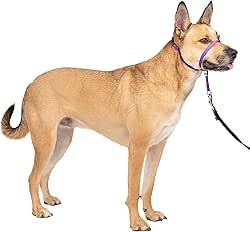
This is one of the original head harnesses on the market, and I’ve used it myself. I appreciate its straightforward design. The clip under the chin allows for easy adjustment, while the clip at the back of the head simplifies putting it on and taking it off. The low leash attachment point means you can attach a secondary collar for added security without interfering with the head harness’s function.
Electronic Collar
Electronic or shock collars are controversial, especially in the rescue community. The potential harm of using such a tool with a rescue dog is evident. Dogs typically find the shock startling and might not understand its source. This can lead to unintended negative associations.
For instance, a German Shepherd named Heidi was playing with a dog friend when she was shocked by an electric fence. She associated the pain with the other dog, leading to lifelong intense aggression towards all dogs.
While this occurred with an invisible fence rather than a shock collar, the principle is the same. Dogs don’t understand where the shock comes from and, logically, try to associate it with something.
This potential for misunderstanding makes shock collars riskier than other aversive techniques. However, when used correctly, they can be incredibly useful, especially for off-leash obedience.
If used correctly, shocks should be rare and eventually phased out. For advanced training with your rescue dog, an electronic collar might be appropriate. But extreme caution is essential when working with a rescue dog.

Electronic collars can be useful for off-leash obedience training. In some cases, an electronic collar can distract attention and reduce arousal in a reactive dog. But, I’d only use the lowest levels of stimulation, sticking to vibration and not the shock setting. Electronic collars can also be invaluable for deaf dogs as a way to get their attention, but never use the shock in such cases.
The Best Electronic Collar For Dogs: Bousnic Shock Collar

This is the collar we use for our standard poodle for off-leash and advanced behavior training. It has been instrumental in marking his behavior, helping him discern desired from undesired actions. We appreciate the compact controller and the lightweight collar.
How to Choose the Right Collar for Your Dog
Size and Fit
Measure your dog’s neck
Measure your dog’s neck at the point where the collar will rest using a soft measuring tape. Alternatively, you can use a string and then measure the string against a ruler.
- Flat collars: You should be able to comfortably fit two fingers between the collar and the dog’s neck.
- Martingales: These should be adjusted so that when tension is placed on the leash and the ends of the limited slip portion come together, it cannot slip over the dog’s head. When there is no tension on the leash, the collar should hang loose and comfortably on the dog’s neck, considerably looser than a flat collar would.
- Chokes, chains, and slip leads: These are infinitely tightening, so there’s no adjusting for that. However, they should be just loose enough to hang comfortably around the dog’s neck but not so loose that they can easily snag on anything.
Choosing the Collar Width
For larger dogs, particularly those that pull, a broad collar is best. It’s not just sturdier but also spreads pressure more evenly, minimizing neck and throat injuries.
For smaller dogs, an overly wide collar can be cumbersome and restrict movement. Most collar manufacturers tailor the width to the size.
Breeds with long necks, like sighthounds, often need a wide martingale collar, which not only stays on their slim heads but also protects their fragile necks by distributing pressure broadly.
Choose an Adjustable Collar
Some collars only allow you to adjust a limited portion of their length, while others can be adjusted throughout the entire length.
If you’re choosing a collar for a puppy that you’d like to continue wearing as it grows, a highly adjustable collar is essential.
Check the Collar Regularly
I cannot emphasize enough the importance of regularly checking your dog’s collar. This is especially crucial for growing puppies but also vital for older dogs.

It’s astonishing how many dogs come into shelters with embedded collars. I’ve seen owners who adore their dogs shocked to discover that a collar has started to leave a mark on their dog’s neck when they remove it.
An overly tight collar is uncomfortable and can cause permanent damage.
A collar that’s too loose can get snagged, potentially strangling a dog or sliding off.
Even the best collars, like the one I use for my dog, loosen slightly over time due to everyday wear and tear. Therefore, it’s essential to regularly check and adjust your dog’s collar.
Material
Nylon
Nylon is the standard go-to material for most dog collars, and for good reason. It’s the material of my favorite collar and has been the most common material for the collars I’ve used.
| Pros |
|---|
| Durable, lightweight, and more affordable than most other materials. |
| Easy to clean and available in a variety of colors and designs. |
| Resistant to light chewing and strong enough to contain the vast majority of dogs. |
| Cons |
|---|
| Weakens and fades if frequently exposed to water and sun. |
| May irritate dogs with sensitive skin, especially if a wet collar remains on them. |
| May not be aesthetically pleasing and not the top choice for fashion-savvy rescue dog owners. |
| Not as robust as some materials like chain. |
Leather
Leather collars are undeniably attractive and typically very strong. They have their place, including for rescue dogs, though they usually aren’t my first choice.

Leather collars exude a stylish class, enhancing any dog’s appearance.

This isn’t just about vanity; for a dog available for adoption, a leather collar can make a significant difference. A plain-looking dog might get a second glance with a dignified leather collar.
| Pros |
|---|
| Strong, attractive collars that might appeal to potential adopters. |
| Natural leather may not irritate the skin of dogs that would be bothered by other collars. |
| Leather, especially rolled leather, is gentle on fur, making it ideal for dogs that tend to mat. |
| Cons |
|---|
| Generally more expensive, especially for chemical-free leather and rolled leather collars. |
| Requires more maintenance than other collars, often needing regular oiling to prevent cracking and drying. |
Faux Leather (or Vegan Leather)
Faux leather collars offer many of the same aesthetic benefits as genuine leather. They tend to be gentler on the skin and more resistant to matting than real leather. Plus, they’re humane and usually more affordable.
| Pros |
|---|
| Offers the appearance and skin and fur-friendly qualities of leather without using animal products. |
| Generally more affordable than genuine leather. |
| Cons |
|---|
| Not as durable as genuine leather. When faux leather dries out, it can’t be conditioned and will need replacement. |
| Not as strong as genuine leather. |
| Might irritate the skin, depending on the materials and any chemicals used. |
Chain (Metal)
I generally don’t recommend chain collars for rescue dogs.

Chains often carry a negative connotation, making rescue dogs appear more intimidating. This perception isn’t conducive to securing adoptions. However, there are some applications for metal as a material for dog collars.
| Pros |
|---|
| Extremely strong and bite-proof, capable of containing almost any rescue dog. |
| The clicking sound of a chain can be a useful training tool, especially for choke or Martingale collars. |
| Highly durable when maintained properly, often lasting for many years. |
| Suitable for long coats as it prevents matting. |
| Dries instantly, so it won’t irritate a dog’s skin, especially if they enjoy spending time in the water. |
| Cons |
|---|
| The intimidating association with chains isn’t something typically wanted linked to rescue dogs. |
| Can be heavy and hard, potentially causing irritation, especially if worn continuously or if the dog pulls frequently. |
| Dogs with negative experiences often associate those with chain collars, intensifying their aversion. |
Hemp
Hemp is a soft material that’s gentle on the skin. Dogs irritated by other collar types often fare better with hemp. Its natural appearance is also aesthetically pleasing.
| Pros |
|---|
| Hemp is eco-friendly and sustainable, appealing to environmentally-conscious dog owners. |
| Its hypoallergenic and antibacterial properties are gentle on a dog’s skin, especially if they’re prone to irritation or allergies. |
| Hemp’s unique look is attractive to many, myself included. |
| Cons |
|---|
| Hemp collars are rarer than other materials, making it challenging to find the desired type. |
| Typically pricier than other materials, especially for well-crafted collars with additional features. |
Neoprene
My opinion on neoprene collars is mixed. While suitable for some dogs, they’re not ideal for others.
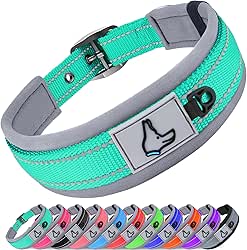
Neoprene offers valuable padding, especially beneficial for dogs that pull, but it has notable downsides.
| Pros |
|---|
| Provides a thick layer of padding, typically extending beyond the nylon’s edge, preventing chafing. |
| Water-resistant and relatively quick-drying. |
| Available in vibrant colors that add flair to an otherwise mundane collar. |
| Cons |
|---|
| Durable but not inherently strong; its strength depends on the accompanying material. |
| Neoprene collars can sometimes bleed color onto a dog’s fur. Advisable to wash them a few times, especially for light-colored dogs. |
| While advertised as quick-drying, a wet neoprene collar on a dog can trap moisture against the skin, causing irritation and potential infections. |
Plastic and Rubber
For the type of rescue dog I often refer to as “the hippo” (bully or lab types that love water), plastic collars are ideal. These waterproof collars dry almost instantly, eliminating concerns about moisture retention like with most other collars.

| Pros |
|---|
| Completely waterproof and dries instantly, ideal for water-loving dogs. |
| Available in various colors that typically don’t bleed. |
| Generally affordable. |
| Extremely easy to clean; a simple wash can remove most dirt or stains. |
| Highly adjustable with a broad range. |
| Cons |
|---|
| Not as robust as other collar types and prone to chewing. They often resemble dog toys in texture and appearance. |
| Limited design options, primarily standard buckles or clasps, not Martingale or slip styles. |
| May not be as durable, especially when exposed to sunlight, which can cause fading and cracking. |
| Can unintentionally loosen, even during a single wear. |
Rope

Rope collars have a unique appearance and offer benefits not found in other collars. However, they’re less common for rescue dogs and more popular with working dogs.
| Pros |
|---|
| Distinctive and appealing, especially when combined with leather. |
| Round, smooth rope reduces matting and skin irritation. |
Rope’s versatility allows for high adjustability and different leash attachment points, as perfectly illustrated in this Ruffwear, Knot-a-Collar Dog Collar. |
| Cons |
|---|
| Rope is enticing for dogs to chew on and is easily chewed through by most rescue dogs, making it one of the least chew-resistant collars. |
| Some rope collars, or the connection between the rope and leather, can irritate the skin or fur of certain dogs. |

BioThane
If you’re a fan of plastic or rubber collars, consider BioThane. It offers nearly all the advantages of these collars but resembles leather. Many of these collars also feature a reflective strip, which is less common on rubber collars.
| Pros |
|---|
| Provides the water-resistant and quick-drying benefits of plastic or rubber collars while mimicking the appearance of leather. |
| Available in more variations than rubber collars. You might even find a Martingale or slip lead version. |
| Comes in a wide range of stylish colors, designs, and buckle types. Most are highly adjustable and easy to modify. |
| Cons |
|---|
| Shares the same drawbacks as plastic and rubber in that it degrades quickly when exposed to sunlight and with general use. It’s also easily chewed by dogs and is quite appealing as a chew toy. |
| Additionally, it tends to loosen with ease. |
| The attempt to mimic leather might not appeal to everyone, especially those who prefer the straightforward appearance of rubber or plastic. |
Velvet
There’s something delightful about seeing a rescue dog in a velvet collar. It’s reminiscent of the canine version of “Pretty Woman.”
While velvet might not be the first material that comes to mind for a rescue dog collar, it can leave a lasting impression and serve as a conversation starter, especially for an otherwise intimidating-looking rescue dog.
| Pros |
|---|
| Velvet simply looks elegant. Few things are classier than a velvet collar for your rescue dog. |
| Its ultra-soft texture is gentle and non-irritating to the skin and coat, making it ideal for puppies. |
| Available in various colors and designs, often adorned with a cute bow tie or customizable buckles featuring the dog’s name. |
| Cons |
|---|
| Velvet collars aren’t suitable for handling powerful rescue dogs. While many are reinforced with a stronger secondary material like cotton webbing, most aren’t robust enough to manage a forceful dog. |
| Velvet is prone to staining and requires care to maintain its pristine appearance. |
| Choices are limited, with most being basic buckle or clasp collars. |
Closure Type
Buckle Closure
These typically resemble a belt buckle, where the collar threads through and is secured in a hole. This type of closure tends to be strong and unlikely to release unintentionally. However, it can be challenging to remove in emergencies and isn’t as adjustable as other closures.
Roller Buckle
A variation of the traditional buckle, this uses a roller to facilitate fastening the collar and reduces wear on the strap.
Snap Closure
This is the most prevalent closure on dog collars, similar to a backpack snap where you press on the two sides to release it. This closure is quick and easy to use but may not be as secure as a buckle closure.
Slide Closure
These collars slip over a dog’s head and then tighten. Commonly used in slip collars and martingales, they tend to be very secure since there’s no latch to release. However, they can be challenging to remove in emergencies. That’s why I prefer a martingale with a safety snap closure.

Velcro
Velcro can be beneficial for specialty or therapeutic collars due to its highly adjustable nature. However, it’s not strong enough on its own to restrain a dog. Velcro is often used alongside other closures to protect them from dirt and debris or to prevent the dog from chewing on them.
Safety Features
Breakaway Mechanism
Commonly seen in cat collars, they remain secure until sufficient pressure is applied, causing them to snap off. These collars are ideal for identification but not for leash walking. They offer a safe alternative for dogs wearing collars indoors, reducing strangulation risks.
Reflective or Illuminated Materials
These collars feature reflective strips or LED lights, ensuring visibility in low-light conditions. Essential for nighttime walks, they are beneficial for any dog, increasing their visibility to avoid accidents.
Separate Attachment Point for ID Tags
Sometimes, when collars fail, the leash attachment ring rips off. If the tags are also on that ring, they’ll be lost. A separate ring not only reduces noise but also ensures the tags remain with the dog if they break free.
Quick Release Buckle
A safety feature I deem essential. Similar to the snap closure, it has an additional button to enhance security. It’s easily removable but nearly impossible for a dog to unfasten accidentally.
Personalized Collars
These feature the dog’s name, your number, and possibly messages like “adopt me” printed directly on them. This design ensures no lost tags and reduces risks of tags getting snagged.
Aesthetic and Style
Humans have various clothing options, but dogs primarily have collars. A dog’s collar can reflect their personality and yours. From functional designs to flamboyant ones aiding in adoption, a collar’s appearance matters.
Adorned with rhinestones, charms, or bow ties, these can attract attention and invite comments, potentially aiding in a rescue dog’s adoption.
However, spiked or studded collars might convey that a dog is intimidating or aggressive, which could be counterproductive.
A collar featuring a sports team’s logo can draw attention and initiate conversations on game days. Bandana, bow tie, or ruffle collars can make bold statements. Even intimidating dogs appear less so in a pearl-studded collar or one with large artificial roses. Your rescue community can have fun decorating standard collars with accessories reflecting the dog’s personality. Ensure any decorations don’t compromise the collar’s functionality.
Maintenance
Don’t overlook maintenance when it comes to choosing a collar. Many collars can and do break without proper care. Leather collars require oiling. Nylon, velvet, and hemp collars need to be hand-washed or machine-washed periodically.
Plastic and biothane collars need to be washed when they get dirty and checked for brittleness or weakness regularly. Collars with multiple components, like rope and leather, may need careful, specialized cleaning. You don’t want to invest in a collar only to realize it requires more maintenance than you’re willing to deal with and have to replace it soon.
Cost
I get it, having a dog is expensive. Buying equipment for a dog that isn’t yours can be even more taxing. However, the collar is not where you should compromise. This is the most vital tool for keeping your dog safe and secure and for identifying them in case they get lost.
If your local shelter is anything like mine, there’s probably a donation bin full of Max and Neil Martingale collars. Ask your shelter if you can use one of them for your dog if you can’t afford to buy a quality collar.
Feedback and Reviews
I’ll make recommendations based on the equipment that I’ve used in this article, but be sure to check the reviews for whatever collar you’re considering before you make a purchase.
Reviews can provide more in-depth insights into the experiences of people with situations and dogs just like yours and highlight essential points about a product that you need to know before buying.
Dogs That Shouldn’t Use a Collar
Collars aren’t appropriate for every dog. Before you start looking into what kind of collar you should get for a rescue dog, take a minute to think about whether a collar is right for your rescue:

- Persistent Pullers: Dogs that consistently pull hard on the leash may be at risk of throat or tracheal damage with a flat collar. For them, a harness might be a better option. A good solution may be to use the harness in conjunction with the collar so you can train your dog without choking them.
- Brachycephalic Breeds: Dogs with short noses and flat faces (like Pugs, Bulldogs, and Boston Terriers) can have respiratory issues. A flat collar exacerbates breathing problems, especially if they pull. Veterinarians typically recommend that brachycephalic breeds be walked on a harness instead.
- Dogs Prone to Back Issues: Dachshunds, Corgis, and other long-backed breeds and their mixes can be prone to disc issues, which can be aggravated or triggered by being walked by the neck. These dogs should be walked on harnesses.
- Dogs with Medical Issues: Any dog with a history of throat or tracheal problems, or who has had back problems, should avoid undue pressure on their neck.
- Puppies: Their bodies are still developing, and they don’t have enough sense not to pull at the end of the leash. It’s best to start them on harnesses until they have a better sense of control.
- Small or Delicate Dogs: Small dogs are often the ones most prone to back issues, but they also simply have delicate necks and throats that can be easily damaged by pulling just a little bit too hard. It’s best to use a harness with them.
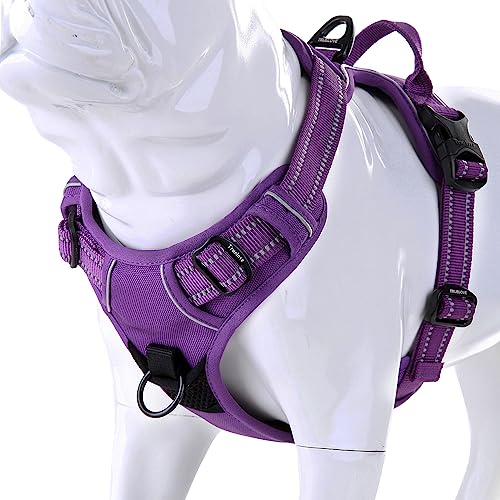
The Best Harness For Dogs
This is a nice little harness with a front and back attachment and a padded handle on the back for extra control. I like how it comes in fun, attractive colors that can make a rescue dog look less intimidating.
7 thoughts on “The 13 Best Rescue Dog Collars”